Workshop Scope
Medical imaging has long relied on discrete, grid-based representations that impose artificial constraints on inherently continuous anatomical structures. This workshop aims to explore "off-grid" approaches, from Implicit Neural Representations to Gaussian Splats, ultimately advancing medical image computing and computer assisted intervention.
Topics of Interest
We welcome submissions on a wide range of "off-grid" methods, including but not limited to:
Neural fields and implicit neural representations for encoding MRI, CT, X-ray, ultrasound, pathology images, endoscopy, and other medical signals
NeRFs, Gaussian Splatting, and related techniques for 2D/3D/4D visualization, novel view synthesis, and surface/volume reconstruction of anatomical structures
Generalization approaches including autodecoders, hypernetworks, or meta-learning strategies
Neural compression strategies using implicit representations for high-fidelity storage and transmission of large-scale medical imaging datasets
Methods leveraging continuous representations for super-resolution, cross-resolution learning, and handling heterogeneous acquisition protocols
Continuous deformation fields and grid-free approaches for image registration across modalities, time points, respiratory/cardiac phases, or subjects
Implicit surface representations and splat-based methods for anatomical structure segmentation and shape completion
Real-time rendering, scene reconstruction, and visualization for surgical planning and navigation
Diffusion models, GANs, and other generative approaches combined with continuous representations for synthetic medical data generation
Methods for estimating uncertainty in INRs, NeRFs, and Gaussian Splatting for safer deployment in clinical workflows
Fourier Neural Operators, DeepONets, and related architectures for learning resolution-independent mappings for reconstruction, super-resolution, and inverse problems
PINNs and their application to solving partial differential equations and parameter estimation in medical imaging
Important Dates
All deadlines are 23:59 Anywhere on Earth (AoE).
Submission Guidelines
Paper Format
- Unless stated otherwise, all paper must follow the official MICCAI 2026 paper submission guidelines
- Papers must be formatted using the official MICCAI 2026 LNCS template
- All submitted material must be properly anonymized for the double-blind review process
- We encourage authors to submit anonymized code alongside their paper (e.g. using AnonymousGitHub)
Originality
All submissions must be entirely original and should not overlap substantially with any work already published or under review. Likewise, no paper with overlapping content may be submitted to another conference, journal, or workshop during the review period (with the explicit exception of preprint servers like arXiv, bioRxiv, MedRxiv, or TechRxiv).
Review Process
Each submission will be reviewed by at least three members of the program committee. We will use OpenReview for the review process, and intend to publish anonymized reviews and meta-reviews. Reviews will evaluate technical quality, novelty, clinical relevance, clarity, and reproducibility. Papers that fail to stick to the formatting rules or are not properly anonymized will be desk rejected.
Participation
All accepted papers must be presented in person by an author registered for physical, on-site participation at the conference. We reserve the right to withdraw an accepted paper from the proceedings if the authors fail to present in person.
Proceedings
Accepted papers will be published in the MICCAI 2026 Workshop Proceedings - Lecture Notes in Computer Science (LNCS) by Springer Nature. We will also provide open access through the MICCAI Society pages.
Submission System (OpenReview - not yet available)Workshop Program
Keynote Speaker
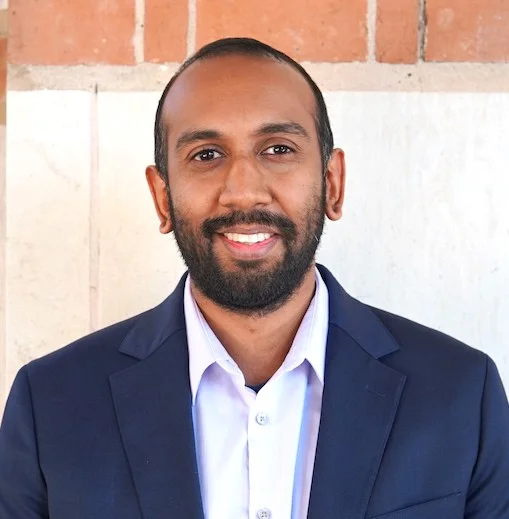
Prof. Guha Balakrishnan, PhD
Rice University
Guha Balakrishnan is an Assistant Professor in Electrical and Computer Engineering. His research focuses on scalable and reliable computer vision methods applied to medical and geospatial imaging. He is a co-author of several influential INR papers including "WIRE: Wavelet Implicit Neural Representations" and "MINER: Multiscale Implicit Neural Representations", as well as MICCAI 2025's best paper "Fit Pixels, Get Labels: Meta-Learned Implicit Networks for Image Segmentation".
Organizing Committee

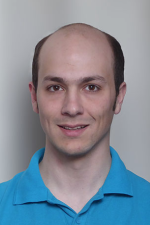
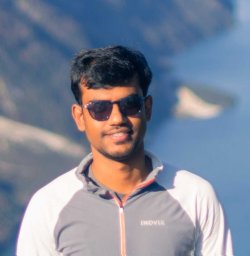
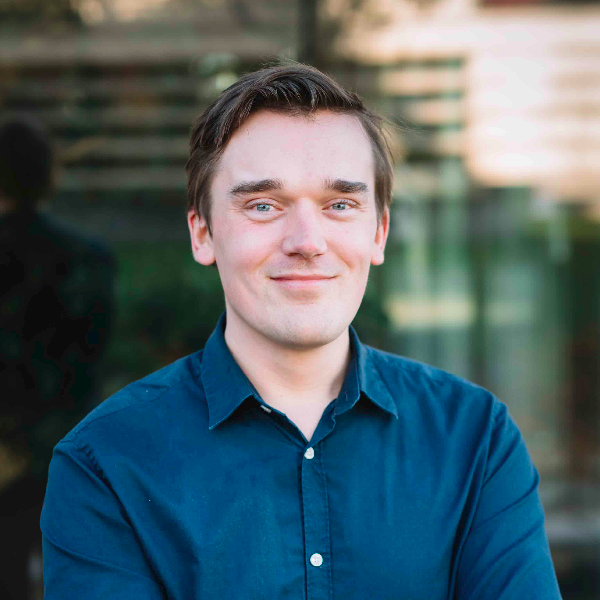
Program Committee
The complete list of program committee members will be announced soon. We are assembling a distinguished panel of experts from academia and industry to ensure rigorous and fair evaluation of all submissions.
Contact Information
For questions regarding the workshop, please contact the organizing committee:
Sponsors
Best Paper Award Sponsor: ImFusion (500€)